
Machine Learning Models for Currency Prediction have become a transformative force in forex trading, allowing traders to anticipate currency movements with unprecedented accuracy. By analyzing vast datasets, recognizing patterns, and adapting to new market conditions, ML models provide insights that traditional methods often miss. These models are increasingly integrated into trading strategies, from short-term scalping to long-term trend forecasting, enhancing decision-making and risk management.
Understanding Machine Learning in Forex
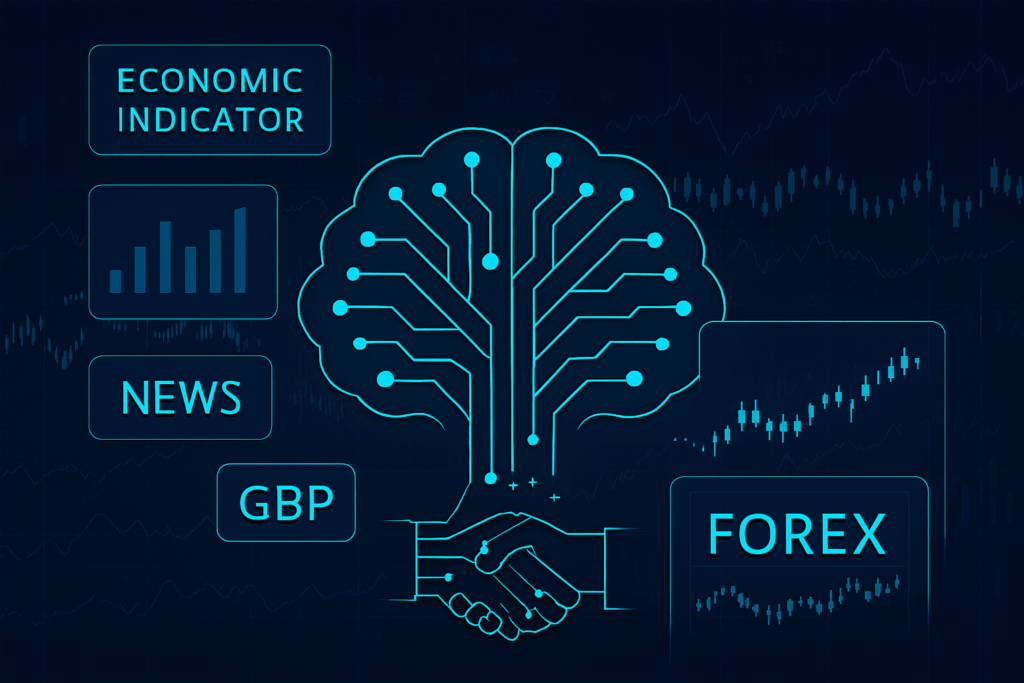
Machine learning is a subset of artificial intelligence that enables systems to learn from data and improve performance over time without explicit programming. In forex, ML models can process historical price data, economic indicators, technical signals, and even news sentiment to identify trends and predict future currency movements.
Unlike static algorithms, ML models adapt to changing market conditions. This dynamic capability makes them particularly valuable in the forex market, where volatility and global events can influence prices rapidly.
Key Types of ML Models for Currency Prediction
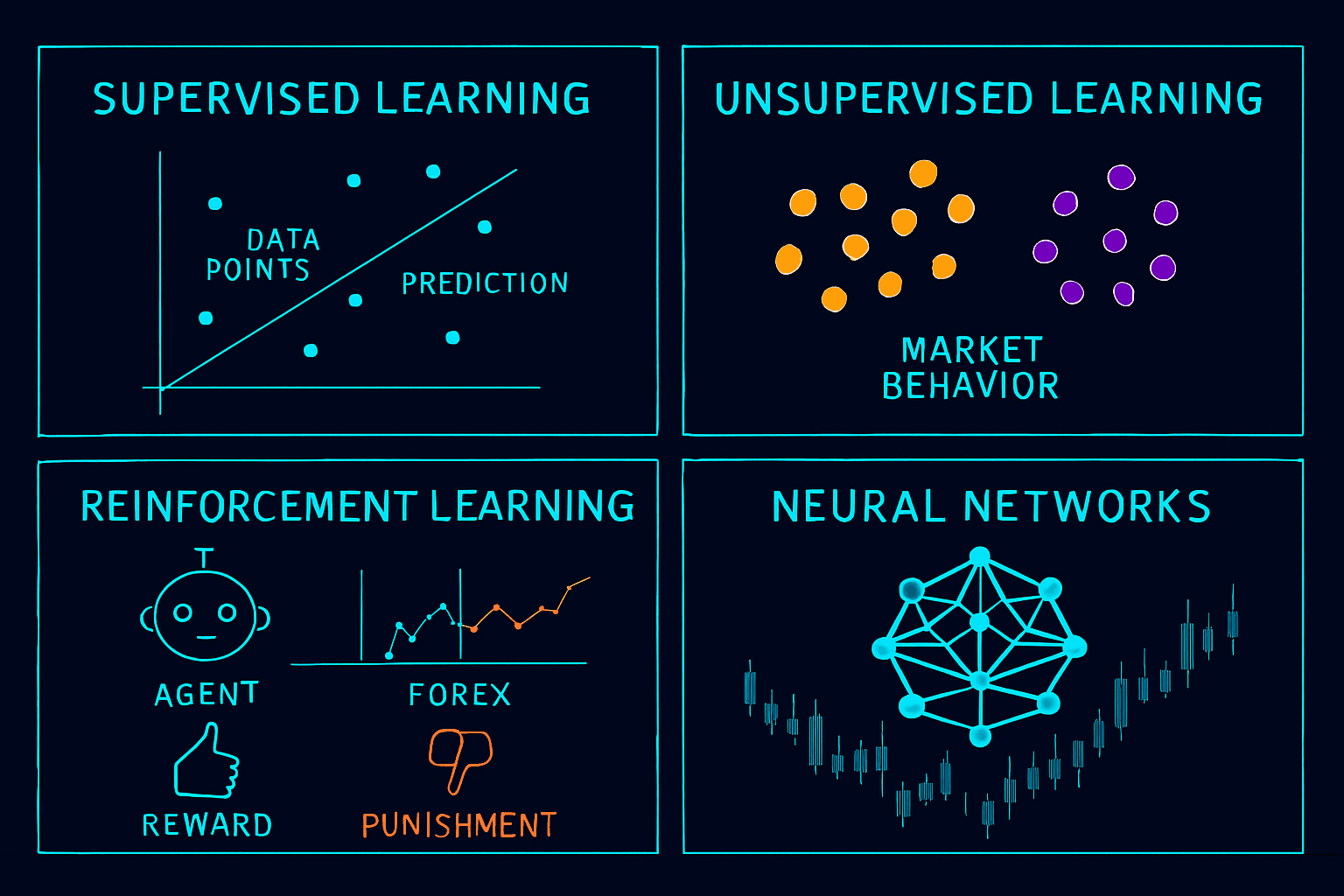
- Supervised Learning
Supervised learning models use labeled datasets, where historical currency prices and outcomes are known, to train algorithms. Once trained, these models can predict future price movements based on similar patterns. Common models include linear regression, support vector machines, and decision trees. - Unsupervised Learning
Unsupervised learning identifies hidden patterns in unlabeled data. For example, clustering algorithms can group similar market behaviors, revealing trends or anomalies that may indicate trading opportunities. - Reinforcement Learning
Reinforcement learning models learn through trial and error, adjusting strategies based on feedback from trading outcomes. These models are particularly effective in dynamic markets, as they continuously optimize their decision-making process. - Neural Networks and Deep Learning
Neural networks, including deep learning models, simulate human brain activity to recognize complex patterns in data. They are capable of detecting nonlinear relationships and subtle signals in currency price movements, often outperforming traditional statistical methods.
How ML Models Improve Forex Trading
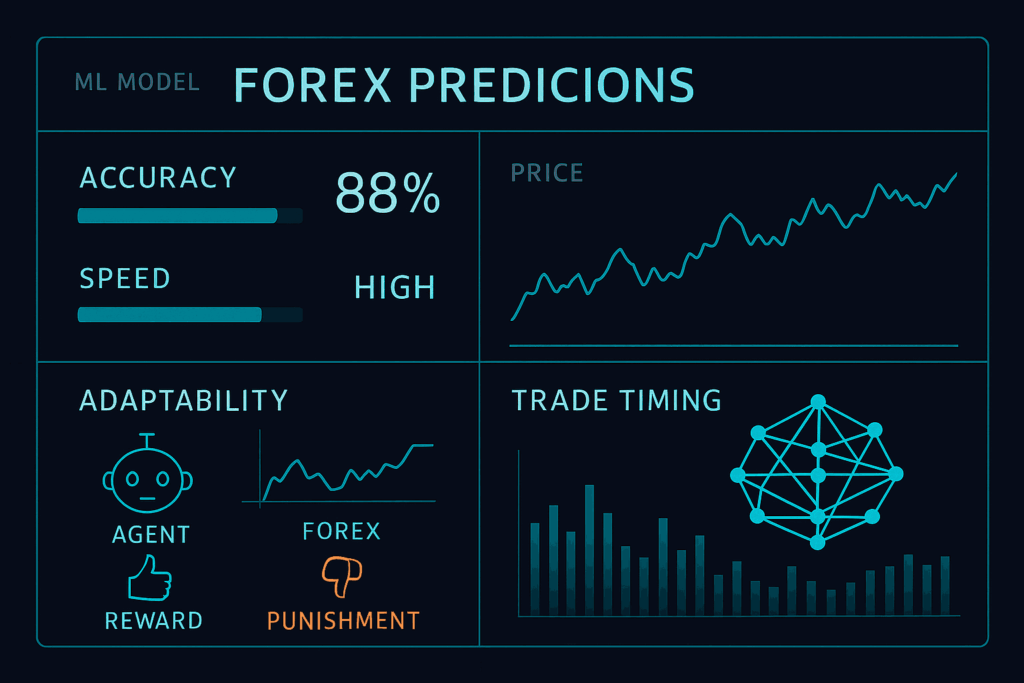
- Enhanced Accuracy: ML models can analyze multiple variables simultaneously, improving the precision of currency predictions.
- Speed and Automation: Once trained, these models can execute predictions in real-time, enabling automated trading systems to act faster than human traders.
- Risk Management: ML can assess potential risks and suggest optimal position sizes or hedging strategies, reducing exposure to market volatility.
- Adaptability: These models adjust to changing market dynamics, ensuring that strategies remain effective even in unforeseen conditions.
Practical Example
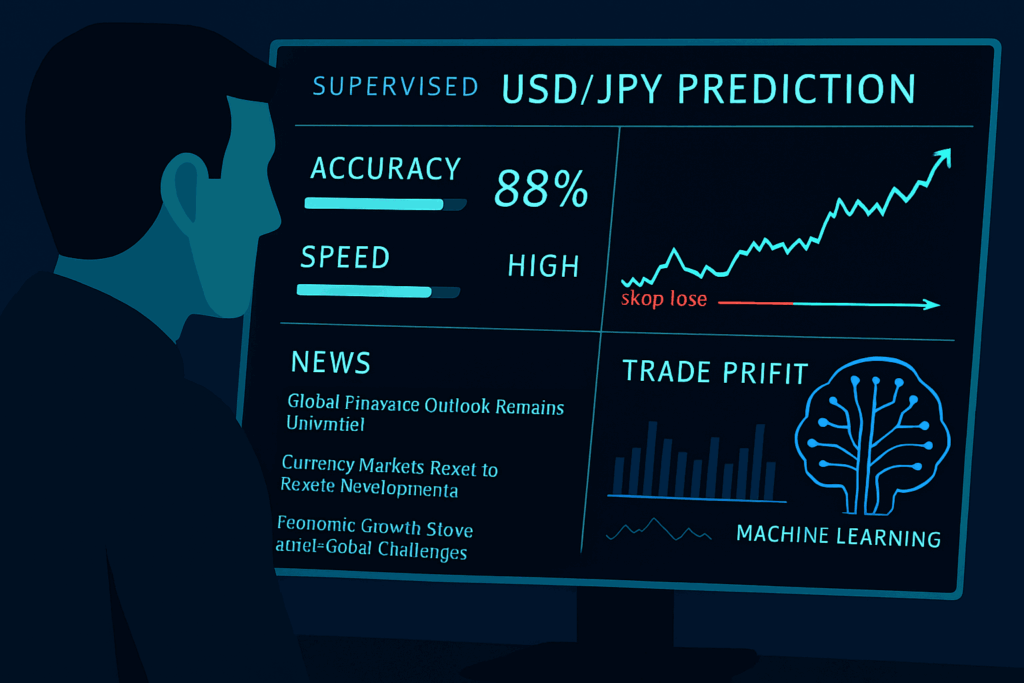
Imagine a trader using a supervised learning model to predict USD/JPY movements. The model analyzes historical price data, interest rate differentials, and geopolitical news. Based on learned patterns, it identifies a high-probability upward move. The trader enters the trade with confidence, using the model’s suggested stop-loss and take-profit levels.
Over time, the model continues learning from each trade’s outcome, refining its predictions. This adaptive approach allows the trader to make data-driven decisions while minimizing emotional influence.
Final Thoughts

Machine learning models are revolutionizing the way traders approach forex markets. By leveraging historical data, real-time signals, and adaptive algorithms, these models provide insights that enhance accuracy, efficiency, and risk management.
While ML is not a guarantee of profits, integrating these models into trading strategies equips traders with a sophisticated toolset to navigate complex market conditions. For those willing to embrace technology, machine learning offers a powerful edge in predicting currency movements and achieving consistent results in the forex market.